
Vranec — the Macedonian pride
Strength
for success.
Warm soils and climates, handpicked grapes, powerful colour, and a taste of chocolate and black fruits.
The name
The black
stallion.
The word VRANEC means strong black and powerful horse — a black stallion — and wine made from this variety of grape is associated with strength, potency and success.
Vran also means raven coloured or black, and that is why red wine is known as black wine in the Balkans.
Vranec has become Macedonia’s most planted grape variety and therefore found its home in the land of eternal sun.
- Synonyms
- Vranac, Vranac crmnichki, Vranac prhljavac (MNE, SRB); Vranec (MKD). Pronounced vrá-nets.
- Origin
- Montenegro — natural crossbreeding or a result of spontaneous mutations.
- Group
- Black Sea Group (Convarietas Pontica), Balkan Subgroup (Subconvarietas Balcanica).
- Maturity
- Second half of September, hand harvested.
- Ampelographic
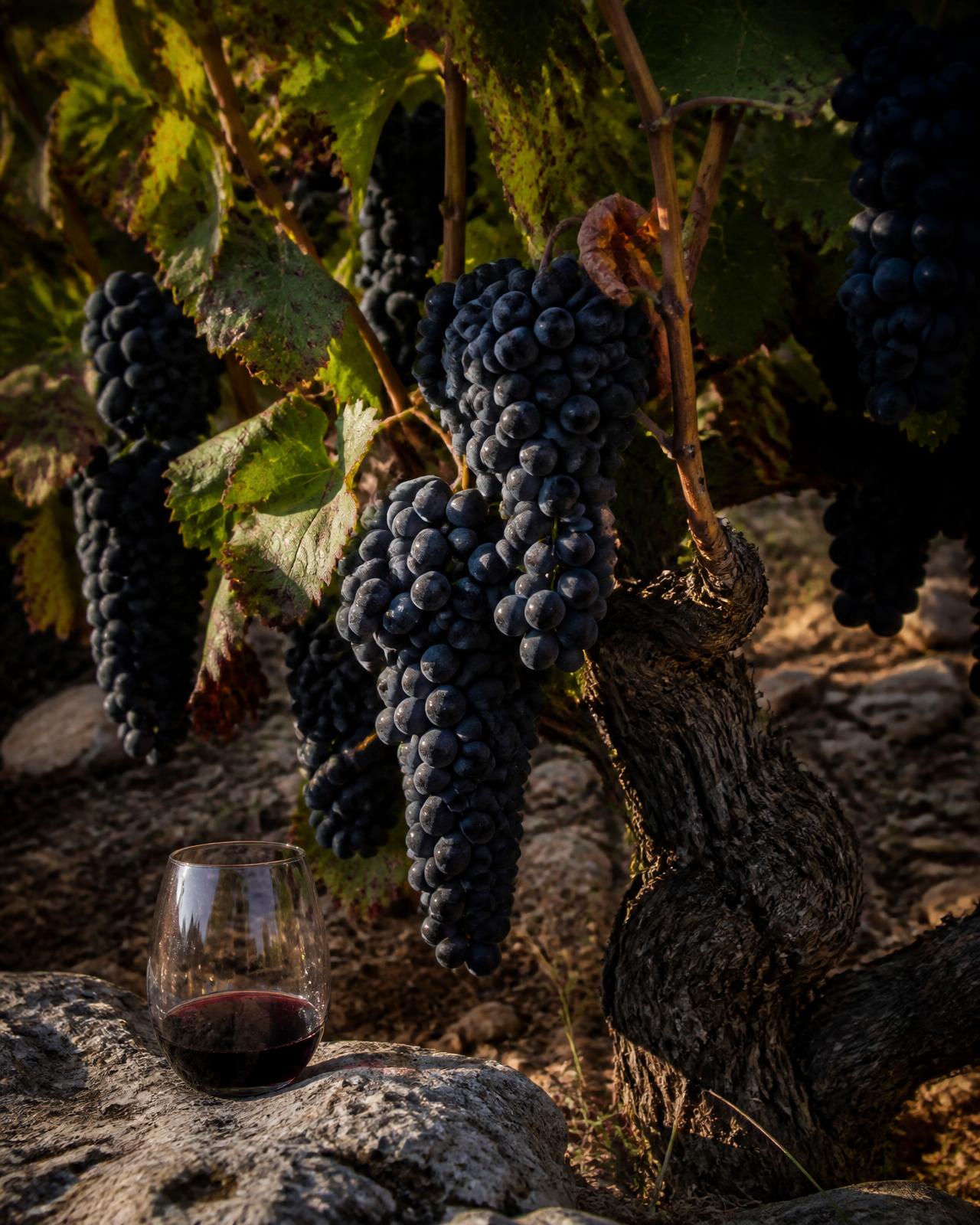
- Grape: medium to large, cylindrical with a wide base. Berry: medium, round and extended. Skin: medium, dark blue, enriched.
- Agrobiological
- Medium resistant to downy and powdery mildew, very sensitive to gray rot in wet ripening conditions. Best results in average fertile, well drained soils with southern exposition. One of the most sensitive varieties to winter frost — buds freeze from -12 °C to -14 °C.
- Powerful colour
- Sugar 200–240 g/l, acidity 6–7 g/l. Deep purple colour with intense aromas of black ripe fruits; full bodied on the palate with ripe, rounded tannins and a long bramble finish. Anthocyanin content above 500 mg/l makes these wines unique.
- Young Vranec
- Colour: bright purple hue. Aroma: strawberry jam, forest fruit and berry. Taste: firm tannin structure supporting a remarkable crispness.
- After ageing
- Colour: intense dark ruby. Aroma: chocolate, cinnamon, black fruits, herbs and oak. Taste: subtle, round and full, with a long lasting, lingering finish.
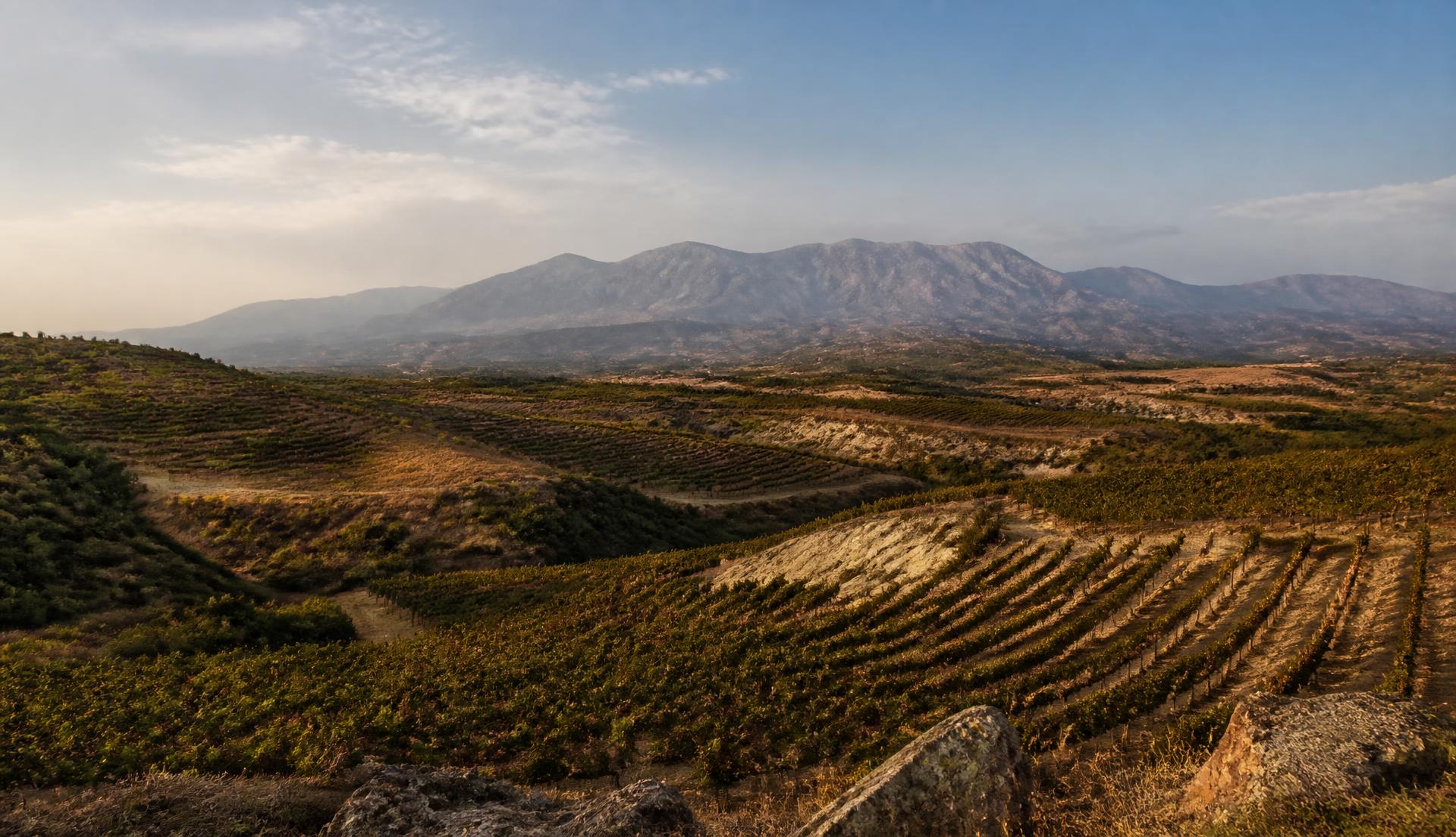
Plantations of Vranec / Vranac
Rooted in
the Balkans.
Vranec is a variety of warm climates and is not recommended for cooler regions. It grows across North Macedonia, Montenegro, Serbia, Bosnia and Herzegovina and Kosovo, and it is very favourable for ageing — blending well with Cabernet Sauvignon or Merlot.